
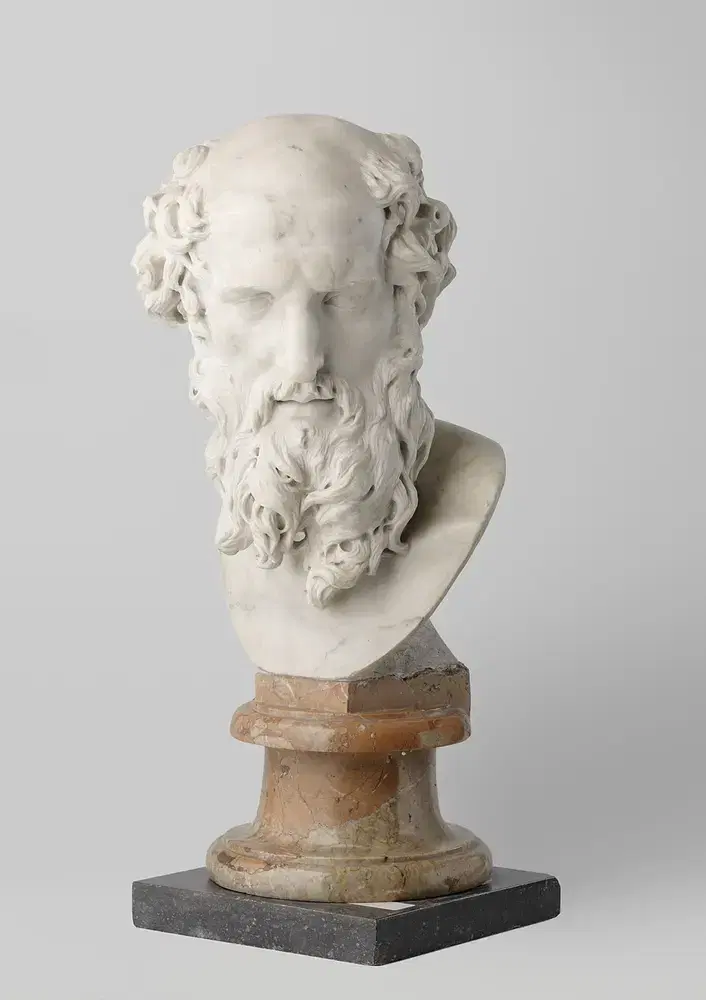
Author
Books by Plato
Ancient Greek philosopher who founded the Academy in Athens and wrote fundamental philosophical dialogues including The Republic.
2 published MeBooks on VisualibleOn Visualible
Available MeBooks by Plato
Every MeBook lets you read the first 20 pages free.

Biography
About Plato
Plato (c. 428/427 – 348/347 BC) was an ancient Athenian philosopher whose visionary dialogues laid the intellectual foundations of Western philosophy, metaphysics, political theory, and ethics. A devoted disciple of Socrates, Plato was profoundly affected by his mentor’s execution by the Athenian democracy, which spurred his lifelong quest to examine justice, knowledge, and ideal governance. Plato founded the Academy in Athens, widely recognized as the Western world's first institution of higher learning, where he mentored Aristotle. Through brilliantly dramatic philosophical dialogues—including The Republic, Symposium, Phaedo, Apology, and Meno—Plato explored core concepts such as the Theory of Forms, the immortality of the soul, the allegory of the cave, and the ideal philosopher-king. Emphasizing that the visible physical world is merely a transient, imperfect shadow of timeless intelligible truths, Plato's intellectual legacy continues to shape the trajectory of philosophy, science, education, and political theory for over two millennia.
Keep exploring
Explore related categories
Read Plato with the context built in.
Open any MeBook and read the first 20 pages free. No subscription, no detours.