
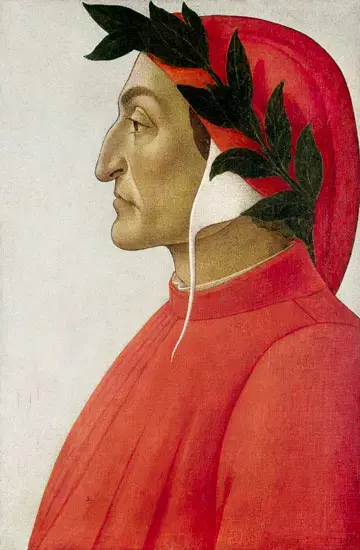
Author
Books by Dante Alighieri
Italian poet of the late Middle Ages whose epic Divine Comedy is considered the supreme work of Italian literature.
1 published MeBook on VisualibleOn Visualible
Available MeBooks by Dante Alighieri
Every MeBook lets you read the first 20 pages free.
Biography
About Dante Alighieri
Dante Alighieri (1265–1321), often hailed simply as Dante or il Sommo Poeta ('the Supreme Poet'), was an Italian poet, philosopher, and political thinker from Florence whose visionary epic, the Divine Comedy (Divina Commedia), stands as the crowning literary monument of the European Middle Ages. Deeply involved in the turbulent factional politics of Florence, Dante was exiled in 1302, spending the remainder of his life wandering northern Italy while composing his immortal verses. Composed in the revolutionary terza rima rhyme scheme and written boldly in the Tuscan vernacular rather than formal Latin, the Divine Comedy narrates Dante’s allegorical pilgrimage through Inferno, Purgatorio, and Paradiso, guided first by the Roman poet Virgil and subsequently by his idealized beloved, Beatrice. Dante’s extraordinary synthesis of Christian theology, classical pagan mythology, scholastic philosophy, and contemporary Florentine history not only codified the Italian literary language but created an eternal meditation on justice, redemption, sin, and the transcendent love that moves the sun and the other stars.
Keep exploring
Explore related categories
Read Dante Alighieri with the context built in.
Open any MeBook and read the first 20 pages free. No subscription, no detours.