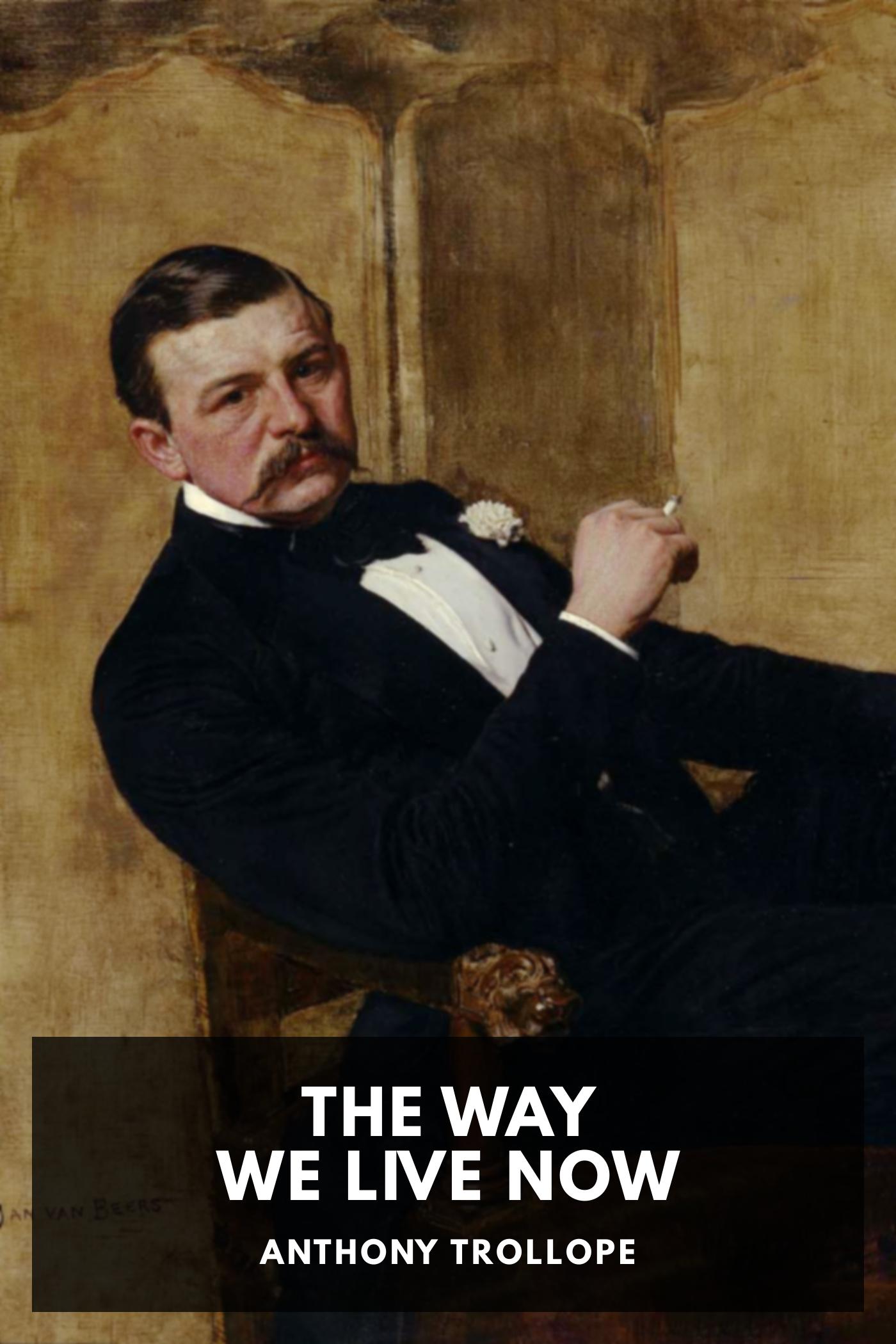
3rd MeBook Edition
The Way We Live Now
The original book text is unchanged. This edition updates only the Visualible MeBook enhancements.
What this MeBook contains
- Optional support for people, places, terms, and context
- Original text preserved exactly as published
- Reading flow remains uninterrupted
- Free future MeBook edition updates
- Built-in dictionary lookup
- Free 20-page preview after sign-in
Anthony Trollope’s The Way We Live Now is a Victorian novel that examines the social and financial world of 1870s London through the rise of Augustus Melmotte, a wealthy and controversial financier. The novel follows the fortunes, ambitions, and relationships of several families and individuals whose lives become connected with Melmotte and the speculative schemes surrounding him.
First published in 1875, the novel is structured as a large-scale social narrative
3rd MeBook Edition
The original book text is unchanged. This edition updates only the Visualible MeBook enhancements.
MeBook Edition Enhancements
3rd Edition Enhancements
- recap generating prompt for generating ebook quick review
Released: Jun 26, 2026
2nd Edition Enhancements
- recap generating prompt for generating ebook quick review
Released: May 11, 2026
1st Edition Enhancements
- Introduces Visualible's reader-support layer for this MeBook.
- Adds optional contextual support for people, places, and terms.
- Preserves the original book text unchanged.
Released: Mar 25, 2026
Why This MeBook Helps
The enhancement for 'The Way We Live Now' provides a comprehensive guide to the novel, featuring detailed character descriptions, a map of places, and an extensive glossary of terms. This resource is invaluable for readers seeking to navigate the complex social dynamics and themes that Trollope weaves throughout the story. By exploring the rich context of the characters and the setting, readers can deepen their understanding and enjoyment of the book.
Understand who the characters are and how they relate to one another
Recognize historical and cultural references
Clarify unfamiliar terms in context
Recall prior events and relationships
Distinguish important places and settings
This work presents an unusually demanding reading environment, with a large cast, extensive geography, historical or cultural references, and accumulated prior context. Visualible provides a deeper prepared support layer to help readers stay oriented while preserving the original text.
Your purchase includes future Visualible editions of this title at no additional charge.
More by this author
Interested in this title in another context?
Visualible can also be explored for teaching, programs, and publisher evaluation.
✓Original text preserved
✓No summaries
✓No chatbot
✓No rewriting
✓Context beside the page