3rd MeBook Edition
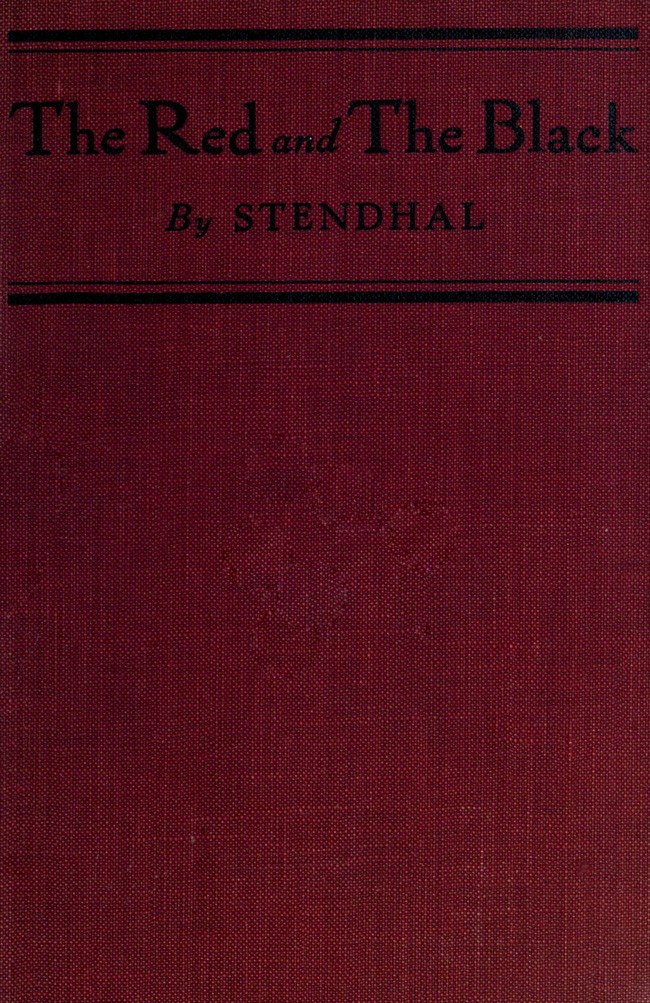
Great BooksThe Red and the Black: A Chronicle of 1830
The original book text is unchanged. This edition updates only the Visualible MeBook enhancements.
What this MeBook contains
- Optional support for people, places, terms, and context
- Original text preserved exactly as published
- Reading flow remains uninterrupted
- Free future MeBook edition updates
- Built-in dictionary lookup
- Free 20-page preview after sign-in
Stendhal’s The Red and the Black: A Chronicle of 1830 is a French historical and psychological novel centered on Julien Sorel, an ambitious young man from a provincial background who seeks advancement through intelligence, education, and social ambition. His aspirations lead him into relationships and institutions that expose tensions between personal ambition and the rigid social structures of post-Napoleonic France.
First published in 1830 and divided into two parts, the
3rd MeBook Edition
The original book text is unchanged. This edition updates only the Visualible MeBook enhancements.
MeBook Edition Enhancements
3rd Edition Enhancements
No enhancements listed for this edition.
Released: Jun 30, 2026
2nd Edition Enhancements
- Improves person and character entries for greater clarity and usefulness.
- Provides more concise descriptions that help readers stay oriented in the story or subject matter.
Released: May 04, 2026
1st Edition Enhancements
- Introduces Visualible's reader-support layer for this MeBook.
- Adds optional contextual support for people, places, and terms.
- Preserves the original book text unchanged.
Released: Mar 24, 2026
Why This MeBook Helps
This enhancement for 'The Red and the Black' provides readers with a thorough exploration of the novel's key elements, including a comprehensive breakdown of characters, places, and significant terms. With 93 characters detailed, including seven major figures, readers will gain deeper insights into the motivations and relationships that drive the story forward. The inclusion of a glossary with 508 terms enriches understanding of the historical and cultural contexts, making it easier to fully appreciate Stendhal's work and its commentary on society in 1830. This guide is an invaluable companion for anyone looking to dive deeper into the themes and intricacies of the novel.
Understand who the characters are and how they relate to one another
Recognize historical and cultural references
Clarify unfamiliar terms in context
Recall prior events and relationships
Distinguish important places and settings
This work presents an unusually demanding reading environment, with a large cast, extensive geography, historical or cultural references, and accumulated prior context. Visualible provides a deeper prepared support layer to help readers stay oriented while preserving the original text.
Your purchase includes future Visualible editions of this title at no additional charge.
Related Great Books


Interested in this title in another context?
Visualible can also be explored for teaching, programs, and publisher evaluation.
Part of Great Books on Visualible
This title is part of Visualible's Great Books collection, featuring major works from Great Books and core-text traditions enhanced to help readers stay oriented without altering the original text.
✓Original text preserved
✓No summaries
✓No chatbot
✓No rewriting
✓Context beside the page