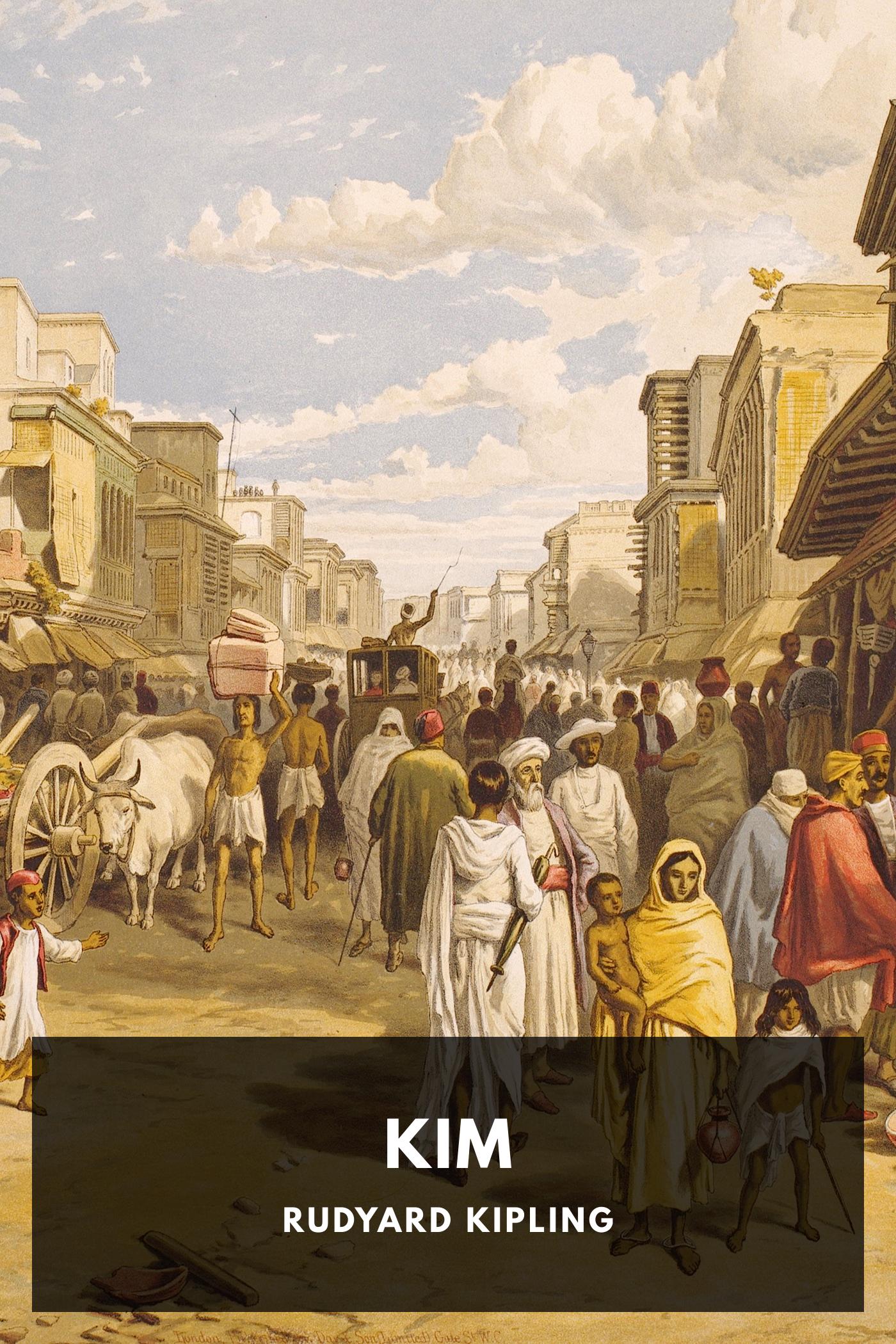
3rd MeBook Edition
Great BooksKim
The original book text is unchanged. This edition updates only the Visualible MeBook enhancements.
What this MeBook contains
- Optional support for people, places, terms, and context
- Original text preserved exactly as published
- Reading flow remains uninterrupted
- Free future MeBook edition updates
- Built-in dictionary lookup
- Free 20-page preview after sign-in
Rudyard Kipling’s Kim is a novel set in British India that follows Kimball O’Hara, an orphaned boy of Irish descent who grows up in Lahore and moves between different social and cultural worlds. His life becomes connected with the British intelligence network and with a Tibetan lama traveling through India in search of a sacred river.
Published in 1901, the novel combines adventure, coming-of-age narrative, espionage, and travel writing. Alongside
3rd MeBook Edition
The original book text is unchanged. This edition updates only the Visualible MeBook enhancements.
MeBook Edition Enhancements
3rd Edition Enhancements
- Adds chapter recaps to help readers quickly refresh key events and stay oriented throughout the book.
- Adds character introduction that help readers understand important people as they first appear.
- Adds explanatory footnotes that provide helpful context for historical, cultural, and literary references from within the book.
Released: Jun 27, 2026
2nd Edition Enhancements
- Improves glossary entries so they better reflect how terms are used within the book.
- Adds more context-sensitive explanations instead of relying on generic dictionary-style definitions.
Released: Apr 22, 2026
1st Edition Enhancements
- Introduces Visualible's reader-support layer for this MeBook.
- Adds optional contextual support for people, places, and terms.
- Preserves the original book text unchanged.
Released: Mar 23, 2026
Related Great Books

Interested in this title in another context?
Visualible can also be explored for teaching, programs, and publisher evaluation.
Part of Great Books on Visualible
This title is part of Visualible's Great Books collection, featuring major works from Great Books and core-text traditions enhanced to help readers stay oriented without altering the original text.
✓Original text preserved
✓No summaries
✓No chatbot
✓No rewriting
✓Context beside the page