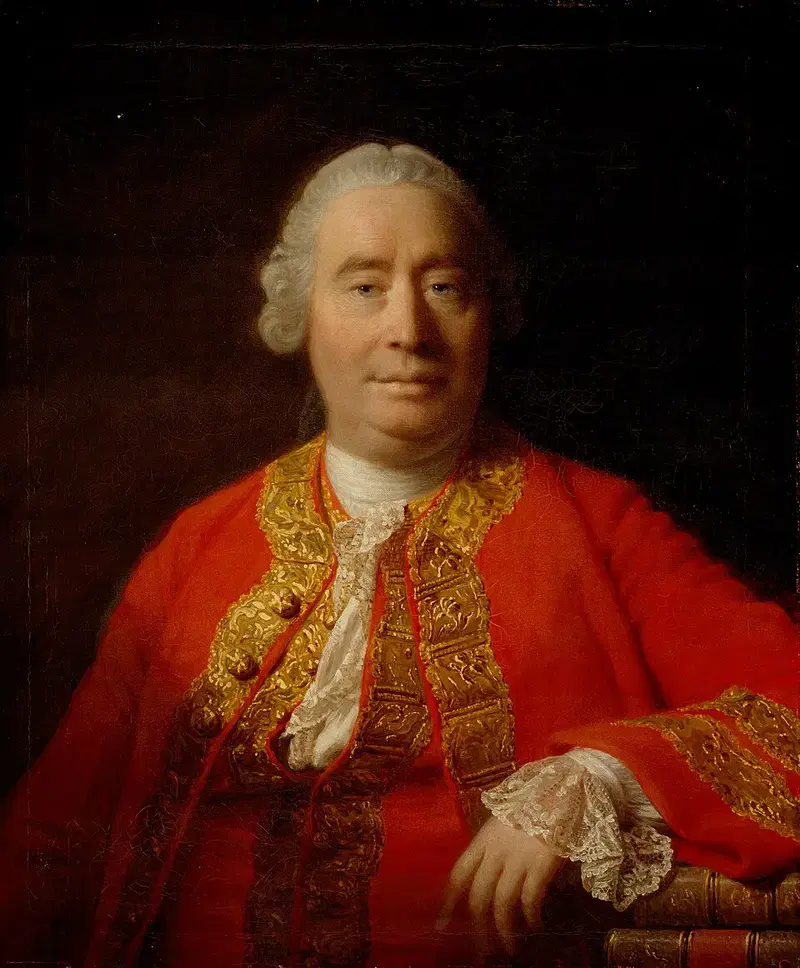
Author
Books by David Hume
Scottish Enlightenment philosopher, historian, and essayist renowned for his philosophical empiricism and skepticism.
2 published MeBooks on VisualibleOn Visualible
Available MeBooks by David Hume
Every MeBook lets you read the first 20 pages free.
Biography
About David Hume
David Hume (1711–1776) was a Scottish philosopher, historian, economist, and essayist widely celebrated as one of the most brilliant and radical figures of the Scottish Enlightenment and Western philosophical history. Born and educated in Edinburgh, Hume sought to develop a pioneering, empirical 'science of human nature' modeled on Newtonian experimental methods. In landmark works such as A Treatise of Human Nature and An Enquiry Concerning Human Understanding, Hume developed a rigorous empiricist epistemology, demonstrating that human knowledge derives exclusively from sensory impressions and ideas. He famously dismantled classical rationalist assumptions regarding causal necessity, arguing that human belief in cause and effect stems from mental habit and psychological custom rather than deductive certainty. Hume’s groundbreaking skepticism extended to personal identity, which he characterized as a dynamic bundle of shifting perceptions, as well as moral philosophy and religious orthodoxy. His provocative writings directly awoke Immanuel Kant from his 'dogmatic slumber' and profoundly shaped contemporary epistemology, cognitive science, and secular ethics.
Keep exploring
Explore related categories
Read David Hume with the context built in.
Open any MeBook and read the first 20 pages free. No subscription, no detours.