
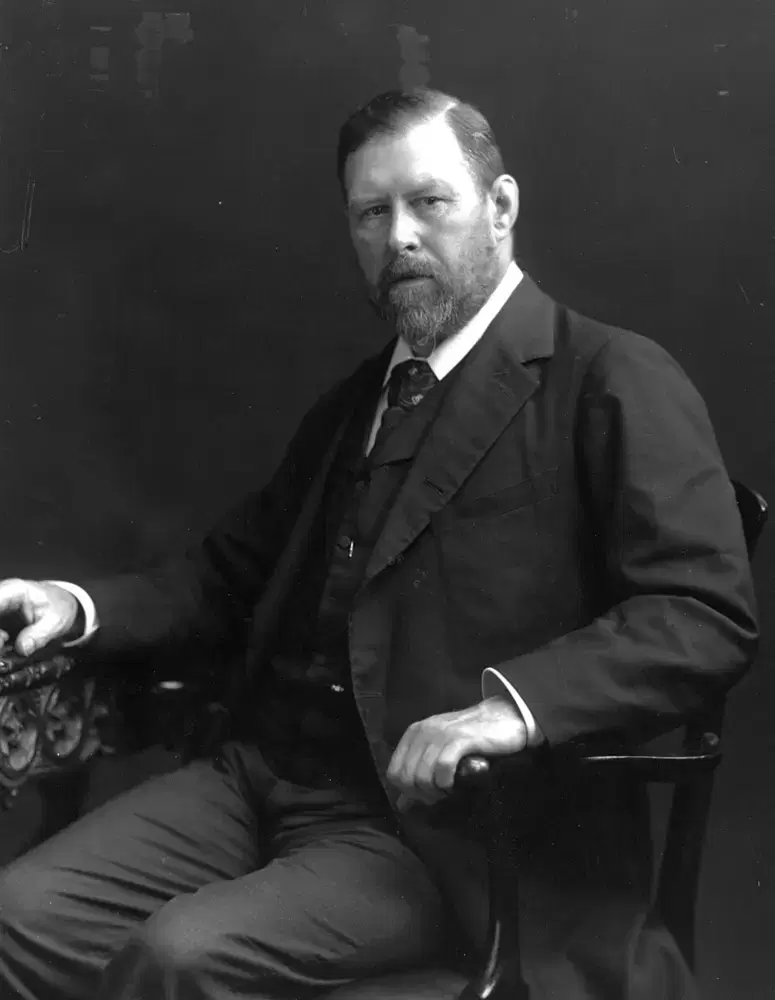
Author
Books by Bram Stoker
Irish author best remembered for creating the iconic Gothic horror novel Dracula.
1 published MeBook on VisualibleOn Visualible
Available MeBooks by Bram Stoker
Every MeBook lets you read the first 20 pages free.
Biography
About Bram Stoker
Bram Stoker (1847–1912), born Abraham Stoker in Clontarf, Dublin, was an Irish novelist, theatrical critic, and business manager whose 1897 gothic masterpiece Dracula established the enduring archetype of the modern vampire in world popular culture. Bedridden by a mysterious illness during early childhood, Stoker developed an acute, feverish imagination that later blossomed during his studies at Trinity College Dublin. For nearly three decades, Stoker served as the tireless business manager of London’s Lyceum Theatre, working closely alongside the charismatic Shakespearean actor Sir Henry Irving and immersing himself in the vibrant theatrical and literary circles of Victorian Britain. Though he published numerous adventure tales, historical romances, and gothic thrillers, Dracula remains his immortal achievement. Utilizing an innovative epistolary format of diary entries, telegrams, letters, and phonograph logs, Stoker ingeniously articulated late-Victorian anxieties surrounding disease, technological advancement, imperialism, sexuality, and the intrusion of ancient superstition into modern rationalism, ensuring Dracula’s lasting literary resonance.
Keep exploring
Explore related categories
Read Bram Stoker with the context built in.
Open any MeBook and read the first 20 pages free. No subscription, no detours.